

Stay Month in Greenwich and You Stop Being a Tourist by Week Two
- October 14, 2026
- Holiday
Blog On your first morning in Greenwich, you do what everyone does. You climb the hill to the Royal Observatory, stand with... Read More
 by Marlex Apartment

There’s something utterly magical about arriving in London for the first time. The moment you step off the train at King’s Cross or emerge from the Tube into the buzzing energy of Leicester Square, you realise you’re standing in one of the world’s most iconic cities, a place where ancient history collides with cutting-edge modernity, where red double-deckers rumble past medieval churches, and where every corner seems to whisper a story.
But here’s the thing about London: it’s vast, gloriously chaotic, and brimming with so much to see that first-time travellers often feel overwhelmed before they’ve even unpacked. Should you start with the royal palaces or the museums? Do you queue for the London Eye or wander through Camden Market? And perhaps most importantly, where should you actually stay to make the most of your time here?
That’s exactly what this London travel guide is for. Whether you’re planning a long weekend or a week-long adventure, I’m going to walk you through the ten absolute must-see attractions that define London, the places that will make you fall head over heels for this remarkable city. And because I know that where you stay can make or break a trip, I’ll also share why choosing serviced apartments in London over traditional hotels might just be the smartest decision you make for your visit.
Let’s dive into the London you’ve been dreaming about.
If you’re going to start anywhere, start here. The Tower of London isn’t just a castle; it’s a thousand years of British history compressed into one imposing fortress on the Thames. This is where Anne Boleyn spent her final days, where the Crown Jewels have been guarded for centuries, and where ravens strut about like they own the place (legend says if they ever leave, the kingdom will fall).
Book a Yeoman Warder tour; these retired military officers, dressed in their distinctive Tudor uniforms, are phenomenal storytellers who bring the Tower’s gruesome and glorious past to life. You’ll hear tales of executions, imprisonments, and royal intrigue that make any Netflix drama look tame. The Crown Jewels alone are worth the visit; standing inches away from the Imperial State Crown, sparkling with nearly 3,000 diamonds, is genuinely awe-inspiring.
The Tower sits right on the edge of the City of London, perfectly positioned for exploring the financial district and the revitalised docklands. If you’re staying in short-stay apartments in London, such as around Tower Bridge or Shoreditch, you’ll be within easy walking distance.
Entry is free, which seems absurd given that you’re walking through 60,000 square metres housing treasures from every corner of human history. The Rosetta Stone, the Elgin Marbles, Egyptian mummies, Samurai armour, the British Museum’s collection spans two million years and feels genuinely infinite.
Here’s my advice: don’t try to see everything. You’ll exhaust yourself and remember nothing. Instead, choose two or three galleries that genuinely fascinate you and spend quality time with them. I’m particularly fond of the Enlightenment Gallery, a beautifully preserved 18th-century “cabinet of curiosities” that feels like stepping into the mind of a Georgian explorer.
The museum sits in Bloomsbury, one of the best neighbourhoods in London for culture vultures. This area is packed with independent bookshops, cosy cafes, and beautiful Georgian squares. Many visitors find that booking an apartment in London within this literary quarter gives them a genuine sense of living like a local, rather than just passing through.
You can’t come to London without seeing where the King lives and works. Buckingham Palace, with its iconic facade and those perfectly disciplined guards in their bearskin hats, represents British pomp and ceremony at its finest.
The Changing of the Guard ceremony happens at 11:00 AM on Mondays, Wednesdays, Fridays, and Sundays (check ahead as schedules vary). Arrive early if you want a decent view. Tourists pack in six or seven deep around the palace gates. The precision, the music, the sheer theatrical pageantry of it all are quintessentially British.
During the summer months, you can actually tour the State Rooms inside the palace. Walking through the throne room and the ballroom where the Queen once hosted heads of state is a surreal privilege. The nearby Green Park provides the perfect spot for a post-palace picnic if the weather cooperates.
Stretching along the Thames from Westminster Bridge to Tower Bridge, the South Bank transforms what could be a simple riverside walk into one of the most vibrant places to visit in London. This is where culture, street food, and river views converge into something special.
Start at the London Eye if you fancy it (book ahead to skip the queues), then wander eastward past the National Theatre, the Tate Modern, Shakespeare’s Globe, and Borough Market. Street performers entertain outside the Royal Festival Hall. Second-hand book stalls line the walkway beneath Waterloo Bridge. The constantly changing pop-up food markets mean you could eat your way along the river, trying everything from Venezuelan arepas to Korean bibimbap.
The Tate Modern deserves its own mention. This former power station turned contemporary art gallery is brilliantly provocative and, like the British Museum, completely free to enter. The Turbine Hall installations alone are worth the visit.
This area particularly appeals to visitors staying in London vacation rentals south of the river, in neighbourhoods like Southwark or Bermondsey, where you’ll find more affordable accommodation London has to offer compared to the West End, without sacrificing accessibility.
Westminster Abbey isn’t just a church; it’s the coronation venue for British monarchs since 1066, the final resting place for seventeen monarchs, and a masterpiece of Gothic architecture that makes you tilt your head back in wonder. Charles Dickens, Isaac Newton, and Charles Darwin are all buried here. Every stone seems to remember something significant.
Audio guides are included with admission, and they’re excellent, narrated in part by actor Jeremy Irons. They provide context that transforms what could be an overwhelming experience into something deeply meaningful. Poet’s Corner, where literary giants are commemorated, gave me genuine chills.
Just outside, Big Ben (actually the name of the bell inside the Elizabeth Tower) and the Houses of Parliament create London’s most photographed skyline. Walking across Westminster Bridge at sunset, with the golden light hitting those Gothic towers, is a moment you’ll remember long after you’ve returned home.
Covent Garden somehow manages to be touristy without feeling like a tourist trap. Yes, there are crowds, but there’s also genuine magic here, world-class street performers who could sell out theatres, brilliant restaurants tucked down side streets, and a market hall that’s been trading since the 1600s.
The performers in the piazza are rigorously auditioned; you’re watching genuinely talented musicians, magicians, and acrobats who create impromptu shows that rival anything you’d pay theatre prices to see. The market stalls sell everything from handmade jewellery to artisan gin.
Neal’s Yard, a tiny square just north of the main market, explodes with colour every building painted in bold yellows, blues, and greens, with vegetarian cafes and natural health shops giving it a wonderfully bohemian vibe. It’s also right next to Seven Dials, a junction of seven streets that’s become one of London’s coolest shopping and dining districts.
This is prime West End territory, and while hotels here can be eye-wateringly expensive, serviced apartments in London around Covent Garden offer significantly better value, especially if you’re travelling with family or friends and can split the cost.
I’m not ashamed to admit that I, a fully grown adult, get genuinely giddy every time I walk into the Natural History Museum’s main hall and see Hope, the 25-metre-long blue whale skeleton suspended from the ceiling. This cathedral to the natural world is extraordinarily architecturally stunning and intellectually fascinating in equal measure.
The dinosaur gallery remains the star attraction, with animatronic T. rexes that still make children shriek with delight. But don’t miss the minerals collection (think precious gems and meteorites) or the Darwin Centre’s cocoon, where you can peek into the work of real scientists.
Like all of London’s major museums, entry is free, though donations are encouraged. It’s located in South Kensington alongside the Science Museum and the Victoria & Albert Museum, creating what might be the greatest museum district in the world. You could easily spend three days exploring just this area.
For a completely different flavour of London, head north to Camden. This is where alternative London lives, a sprawling warren of markets selling vintage clothing, handmade crafts, international street food, and pretty much anything else you can imagine. The energy is electric, the crowds are diverse, and the fashion is boldly eclectic.
After exploring the market, walk along Regent’s Canal. This peaceful waterway, lined with narrowboats and willow trees, provides a stunning contrast to the market’s chaos. You can walk all the way to Little Venice or across to King’s Cross, and it’s one of the loveliest ways to see a side of London most tourists miss entirely.
Camden is also brilliant for live music. Some of the world’s biggest bands, from Amy Winehouse to Coldplay, played their early gigs in Camden’s intimate venues. If you’re staying a bit outside the very centre, perhaps in one of the short-stay apartments London offers in areas like Kentish Town or Islington, Camden becomes your neighbourhood playground.
Sir Christopher Wren’s masterpiece took 35 years to build and remains one of the world’s most iconic buildings. The dome dominates London’s skyline, and climbing the 528 steps to the Golden Gallery at its top rewards you with absolutely breathtaking 360-degree views of the city.
The climb itself is an experience. First, you reach the Whispering Gallery inside the dome, where the acoustics are so perfect that a whisper against one wall can be heard clearly on the opposite side, 112 feet away. Then up to the Stone Gallery, exterior views, and finally the narrow spiral to the Golden Gallery, right at the dome’s peak.
The cathedral’s interior is suitably grand, with intricate mosaics and the tombs of national heroes like Admiral Nelson and the Duke of Wellington. Evensong services, held most days at 5:00 PM, are free to attend and hauntingly beautiful; the choir’s voices echoing through that vast space are genuinely transcendent.
After days of museum-hopping and sightseeing, you’ll crave some green space, and London delivers spectacularly. Hyde Park and its connected neighbour, Kensington Gardens, together form 625 acres of parkland right in the city’s heart.
Rent a pedal boat on the Serpentine lake, visit the Diana Memorial Fountain, or simply sprawl on the grass with a book and a coffee like Londoners do. On Sundays, head to Speaker’s Corner near Marble Arch, where anyone can stand on a soapbox and debate, rant, or philosophise, a uniquely British tradition of free speech that’s both entertaining and occasionally profound.
Kensington Palace, on the gardens’ western edge, offers tours through the royal residence where Queen Victoria was born and Princess Diana once lived. The gardens themselves, with the Italian Gardens and the Peter Pan statue, feel more manicured and romantic than Hyde Park’s wilder expanses.
This area also touches on some of the best neighbourhoods in London for accommodation. Bayswater, Notting Hill, and Paddington all offer excellent transport links and a more residential feel than the touristy centre.
Here’s something I’ve learned from numerous London trips: where you stay fundamentally shapes your experience. A cramped hotel room in a tourist-heavy area can make you feel like you’re just passing through. But staying in proper accommodation somewhere with space to breathe, a kitchen to make morning coffee, maybe a separate bedroom so early risers don’t wake late sleepers, transforms the trip entirely.
This is why serviced apartments in London have become my absolute go-to recommendation for first-time visitors, especially those staying more than a few days. You get the flexibility of an apartment with the services of a hotel: regular housekeeping, 24-hour reception, secure entry, but also a washing machine, a proper kitchen, and actual living space.
The cost comparison is compelling, too. While central London hotels can charge £200+ per night for a standard room, affordable accommodation for London visitors can actually be used (not just sleep in), exists in the serviced apartment sector, often at comparable or even lower prices, especially for longer stays or groups.
Marlex Apartment London specialises in exactly this kind of thoughtful, comfortable accommodation. Their properties are strategically located in areas that give you genuine access to London life, not just the tourist trail. Whether you need a studio for a solo adventure or a two-bedroom apartment for family or friends, the focus is on making you feel settled rather than transient, like you’re living in London, not just visiting.
London isn’t a city you can tick off in a weekend, though many try. It’s a city that reveals itself in layers, the obvious tourist sites first (and yes, they’re obvious because they’re genuinely spectacular), but then the neighbourhood pubs, the hidden gardens, the markets where locals actually shop, the streets that still look Victorian after dark.
These ten attractions give you the essential London, the city you’ve seen in films and dreamed about visiting. But how you experience them, whether you’re rushing from site to site or savoring each one, whether you’re returning to a cramped hotel or a comfortable apartment where you can spread out maps and plan tomorrow’s adventure over a home-cooked breakfast that makes all the difference.
First-time travellers often focus exclusively on what they’ll see, forgetting that where they stay shapes the entire journey. Book your London vacation rentals thoughtfully, choosing locations that connect easily to multiple attractions while giving you a genuine neighbourhood to explore.
Ready to start planning your London adventure? Marlex Apartment offers the perfect base for discovering everything this magnificent city has to offer. With comfortable, well-equipped serviced apartments across London’s most accessible neighbourhoods, you’ll have the space, flexibility, and convenience to explore at your own pace. Book your stay with Marlex Apartment today and experience London the way it’s meant to be experienced, not as a tourist, but as a temporary local falling in love with one of the world’s greatest cities.
This is bio saving issue testing. this is being saved, but this is due to cache.

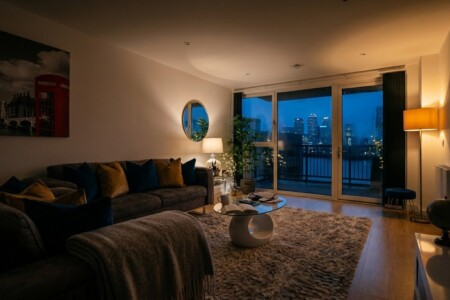
Blog Picture a Tuesday evening in early December. It is not yet five o’clock and London is already dark, but nobody seems to mind. The towers of Canary Wharf glow against the black water of the dock, the pubs have their fires going and you walk home with cold hands and a full day behind you. You step into a warm apartment and put the kettle on. This is the version of London most visitors never see, and it may well be the best one. Most travel advice treats November to February as the season to skip. For a quick weekend, that is fair enough. For a month, it is a different story. If you are relocating, covering a project or giving yourself a long stay in the capital, winter offers value, atmosphere and a pace that summer cannot match. The first thing you notice is how much the city opens up once the summer crowds fade. Queues shrink, restaurants take bookings at short notice and the Tube feels less like a contact sport outside rush hour. Southwark shows this best. Borough Market is calmer on a weekday morning in January, the walk along the river past Tate Modern and Shakespeare’s Globe is almost your own, and a hot lunch from a market stall tastes far better when the air is cold. Tate Modern is free to enter, which turns a wet afternoon into one of the best plans in town. A month gives you time to see it properly instead of rushing through. Winter has its own spectacle too. Canary Wharf hosts a free light festival each January, with illuminated installations spread across its squares and docksides, and the estate looks different in the dark, with the skyline reflecting in the water. Event dates change from year to year, so check before you plan around it. Elsewhere the Southbank and the riverside come alive with festive markets and lights. The point is that winter in London always has something happening, and a long stay lets you enjoy more than one of them. This is where an apartment quietly beats a hotel. In summer you barely notice where you sleep because you are outside until late. In winter you want to come home to somewhere that feels like a retreat. A proper living area, a kitchen where you can make soup or a slow stew and a washing machine for the coat that has just survived a downpour turn a cold month into a comfortable one. A hotel room feels smaller with every week. An apartment gives you space to cook, work and unwind, which is exactly what people need when the days are short and the evenings are long. Short days also make location matter more than it does in July, because the sun sets before four in the afternoon in December. Canary Wharf and Westferry suit anyone working in the east, with the Jubilee line, the Elizabeth line and the DLR close by, so the commute stays dry and warm, and Westferry adds a quieter residential feel and riverside walks along the Thames Path for the weekends. Southwark puts you within walking distance of the South Bank and a short ride from the City. Camberwell offers something different, a lively south London neighbourhood with independent cafes, Burgess Park nearby for a frosty morning walk and good bus links into central London. Each one gives a winter month a different personality, so it is worth choosing the one that suits how you plan to spend your days. A small practical point is worth knowing before you arrive. British homes often use a combination boiler with a thermostat and programmer that can seem confusing at first, and in winter that matters. Ask for a quick demonstration at check-in, find out how to set the heating schedule and ask where wet clothes can dry, since London winters are damp. A good provider will explain all of this before you need to ask twice. Money plays a part too. Outside the Christmas and New Year peak, January and February are among the quietest stretches of the London calendar, which often means better availability and better value on a long booking than the same stay in summer. A full kitchen helps even more, because cooking in on a cold night costs far less than eating out. Contactless fares on the Tube, DLR and buses are capped daily and weekly, so travelling around regularly costs less than most newcomers expect. Pack layers instead of one heavy coat, since shops, trains and apartments are warm and the street is not. Bring a proper waterproof and comfortable shoes, and plan indoor days alongside outdoor ones. Darkness arrives early, so late museum openings and evening events are worth looking out for. London gets quieter, warmer in spirit and far more personal when the weather turns. Marlex Apartments looks after more than fifty-five apartments across London, and our team can help you choose the neighbourhood and apartment that suit your month. Visit the Marlex Apartments website, pick the apartment that fits your dates and message our team with any question about heating, laundry or location before you book. Secure your winter base early and arrive to a warm welcome when the first cold evening comes. Read More

Blog Thirty nights is a long time to spend away from home. There are suitcases to unpack, routines to establish, places to discover and all the little things that come with living somewhere new. For a family travelling from India to London, a month in the city meant more than having somewhere to sleep. It meant finding a comfortable rhythm, getting familiar with their surroundings and making the most of their time away. For this family, Greenwich was home for 30 nights. And when it was time to leave, they had a special way of saying thank you. They presented a large bouquet of flowers to Amanda at Marlex Apartments, a thoughtful gesture that turned an ordinary checkout into a moment worth remembering. The flowers were unexpected. There was no special occasion or formal reason to give them. The family simply wanted to show their appreciation for the care and attention they had received during their stay. For the Marlex team, it was a lovely surprise. For us, it was a reminder of how a month in a new city can become about much more than the place you book. Thirty Nights in Greenwich Anyone who has travelled internationally with family knows that the experience begins long before the first sightseeing trip. There is the journey itself, the luggage, the airport transfers and the task of settling everyone into a different environment. Once the initial excitement wears off, everyday needs take over. People need to eat, rest, get organised and figure out how things work in their new surroundings. When the stay lasts a month, those needs become even more important. A hotel room may work perfectly well for a short visit, but an extended stay calls for a different kind of comfort. Families need room to spread out, somewhere to sit together, and the freedom to organise their days without feeling as though they are constantly living out of a suitcase. This is where a serviced apartment makes a difference. At Marlex Apartments, guests have a furnished space that offers more than a bed for the night. Depending on the apartment, separate sleeping areas, a living room and kitchen facilities allow families to prepare meals, enjoy time together and maintain some of the routines they would ordinarily have at home. There is no need for every meal to be eaten out or every moment of downtime to take place in the same room. After a busy day in London, everyone can return to their own space, relax and decide what the rest of the evening should look like. For a family staying 30 nights, that flexibility is not a small convenience. It becomes part of what makes the stay work. Seeing London Beyond the Apartment Of course, spending a month in London is also an opportunity to experience the city beyond the usual tourist checklist. Greenwich offers its own character, with riverside walks, historic streets, green spaces and attractions that give visitors plenty to explore. It is a place where a day out can involve discovering local history, taking in views across the Thames or simply spending time in a different part of the city. For someone visiting from India, there is plenty to take in. But exploring an unfamiliar city can also come with practical questions. Where should you go? What is worth seeing? How do you get there? And what can you do when you want to experience London without spending every day planning an elaborate outing? During the family’s stay, the Marlex team took the mother on a tour around London, giving her an opportunity to see more of the city and become more familiar with her surroundings. ... Read More

Blog London has always attracted people... Read More

Blog A business trip to London can begin with a flight booked around a meeting, a hotel selected for its location and a calendar filled with appointments. By the time the last meeting ends, it may feel as though the city has passed by outside the window. But what if the trip did not have to end when the work did? For professionals travelling to London, extending a business visit by a day or two can create room to explore the city, meet friends, enjoy a good meal or simply spend time somewhere beyond the conference room. Others may have enough flexibility in their schedules to work remotely for part of the trip, provided their employer’s policies and the practical arrangements allow it. This combination of professional commitments and personal travel is known as *bleisure*, a blend of business and leisure. It has become a recognised subject in the hospitality industry, as accommodation providers respond to travellers who want more flexibility in how they use their time away. For anyone planning a business visit to London, the opportunity is worth considering. The key is to plan it properly. ... Read More

Blog On your first morning in... Read More
Join The Discussion